
About us
We’ve spent our careers connecting business challenges with technology.
Understanding how a company really does a job, and building software that does it dependably, are two different challenges. Geert, Mikael and Joachim have spent their careers doing both.
Who we are
Five co-founders, two generations.
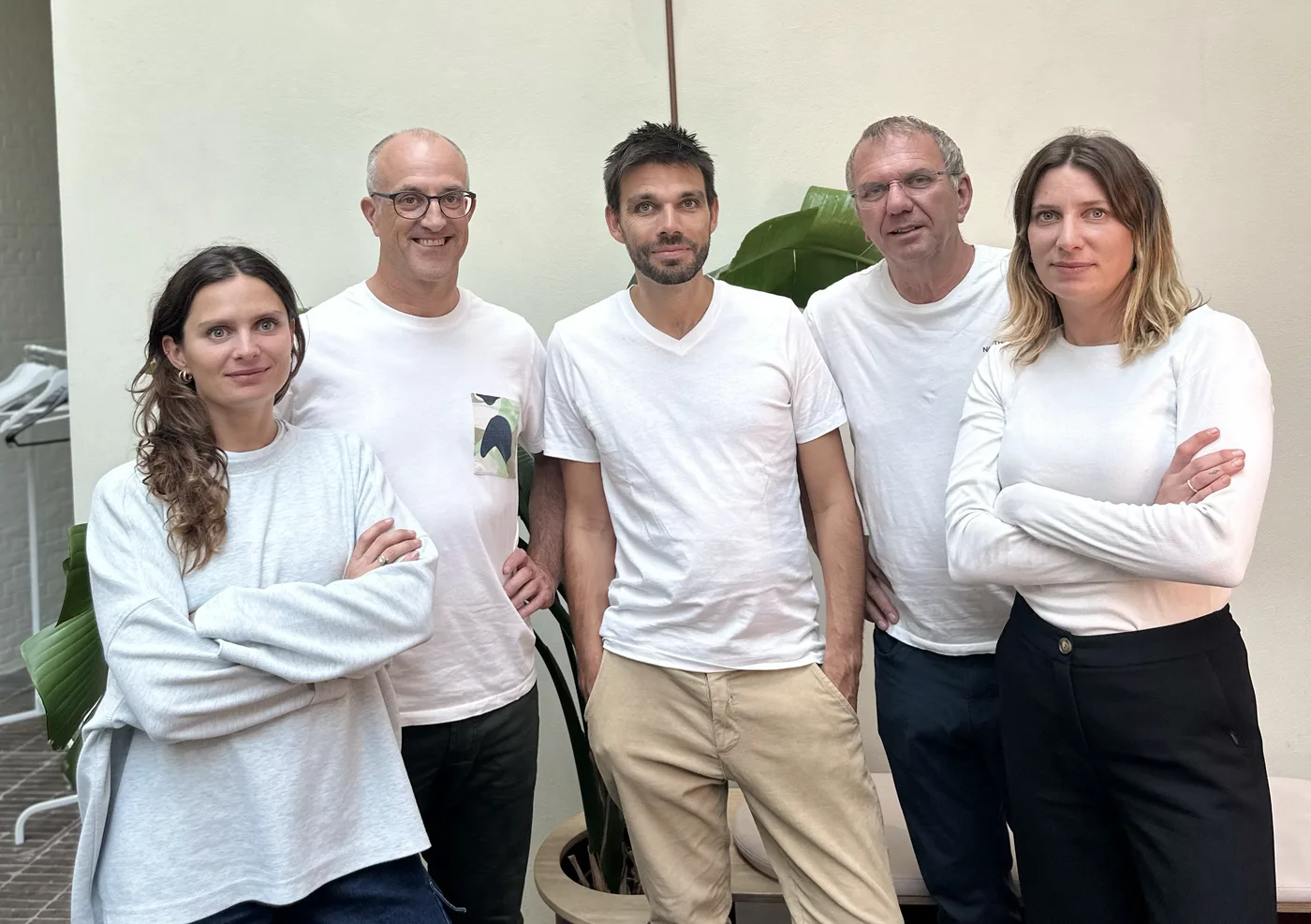
Geert Vanhove, Mikael Pensaert and Joachim Lasoen are three of Shokumu’s five co-founders. Their record includes two software businesses, a consulting and technology company of 350+ people, and ten years running Binocs together.
Loes and Sien Vanhove, Geert’s daughters, are full-time co-founders. Loes works alongside Mikael and Joachim in delivery and operations; Sien alongside Geert in sales and marketing. They take on real responsibility while learning directly from experienced founders.




For the long term
We fund Shokumu ourselves.
Shokumu does not need venture capital to pursue its mission. That gives us the freedom to build the company for the long term, in partnership with the customers that use our digital employees.
We chose the name Shokumu (職務) for its meaning: a job and the responsibilities that come with it. That is the starting point for every digital employee we build, and our own starting point too. We take responsibility for the digital employees we deliver, for as long as they work in your company.
The track record
Consulting and software, for decades.
Binocs
Geert and Joachim envisioned, built and led what became industry-leading planning and scheduling software for quality-control laboratories and advanced-therapy operations, used today by more than 1,500 teams in over 30 countries. They grew it from an operational planning idea into a business of more than fifty people across product, development, sales, delivery and support. Mikael led customer success and delivery worldwide. The work served highly regulated life-sciences companies, with particularly demanding requirements for security and reliability.
Bluecrux
Geert and Mikael founded Bluegrass Consulting in 2011, with Joachim joining from the start. Bluegrass merged with The Crux to form Bluecrux, now a supply-chain consulting and technology company of 350+ people. In 2026, Gartner recognised Bluecrux as a Leader in its Magic Quadrant for Specialist Supply Chain Strategy, Planning and Operations Consulting. Earlier, Geert was a partner and Mikael head of operations at S&V Management Consultants.
Compex
Before Binocs, Geert led product and Mikael research and development for manufacturing-execution and laboratory-information systems at Compex. Gartner ranked its systems first in food and beverage and among the top three in batch-process manufacturing worldwide. Siemens acquired Compex in 2001.
ExplainItOnce
A tool that turns video calls and screen recordings into polished videos and written documentation. Joachim built it solo in three months using AI, work he estimates would traditionally have required ten people working for two years. It showed how much AI had changed the economics of building software, and helped spark the realisation behind Shokumu: custom software could now be viable for individual companies’ jobs.
Why that experience matters
Both halves are needed to take on a real job.
Consulting experience
It matters when the job includes unwritten rules, exceptions and workarounds. Beyond the simplest automation jobs, it takes experienced systems thinkers to uncover that knowledge and question which practices should be kept or changed.
Product experience
It matters when that understanding has to become software your company relies on every day. We have built, delivered and supported complex software internationally for many years. That supports our commitment to stay responsible for every digital employee for as long as they work for you.
Meet Shokumu
0:58 minThe five co-founders introduce Shokumu: what the Japanese name means, why we chose it, and what a digital employee is. A time-consuming job your people do again and again, done the way your company does it, with a name, a face and a human manager.
Questions about Shokumu and its founders.
Is Shokumu funded by venture capital?
No. Geert, Mikael and Joachim fund Shokumu themselves, so it does not need venture capital to pursue its mission. That gives us the freedom to build the company for the long term, alongside the companies that depend on our digital employees.
What does the name Shokumu mean?
Shokumu (職務) means a job and the responsibilities that come with it. That is the starting point for every digital employee we build: one job, and we stay responsible for them for as long as they work for you.
Why should we trust Shokumu with work we rely on every day?
Because understanding how companies work and building dependable software is what the founders have done for decades. They built and led Binocs, planning software used by more than 1,500 teams in over 30 countries, and founded the consulting business that became Bluecrux, now 350+ people. We fund Shokumu ourselves and stay responsible for every digital employee for as long as they work for you.
Is Shokumu a software company or a consultancy?
Both, because a digital employee needs both. Consulting experience uncovers the unwritten rules and exceptions of a job and questions which practices to keep or change. Product experience turns that understanding into software your company relies on every day, on one platform we run and support.
Who will we work with at Shokumu?
Your human employees work with our human solution expert, who learns how they do the job and asks the questions that uncover its rules and exceptions. The co-founders are involved themselves, from expert advice to delivery and support.
Why is custom software for one company’s job affordable now?
Because writing software with the help of AI has become much cheaper. Joachim built ExplainItOnce alone in three months using AI, work he estimates would traditionally have required ten people working for two years. That experience helped spark Shokumu: custom software is now viable for jobs that were too specific to one company before.
Do you have experience in regulated industries such as life sciences?
Yes. Binocs served highly regulated life-sciences companies, with particularly demanding requirements for security and reliability. Before that, Geert and Mikael led product and research and development for manufacturing-execution and laboratory-information systems at Compex.
Can partners or our own IT team build digital employees?
Not yet. Today, Shokumu builds its digital employees and stays responsible for them. We plan to enable partners, and later customers, to build digital employees for the same platform, following the same building rules we do, with an identified organisation responsible for each one.