A business case is only made when the bottom line shows it. Five years ago, an IT transformation needed years to pay back, at least when there was a decent business case at all. AI now drastically shrinks the time it takes to build. But does it shrink the time it takes to implement?
Two halves of every transformation
A technology transformation is the product of two things: building the technology and embedding it in the organisation. If either of them is zero, so is the result.
For decades, building set the pace. Software took months or years to build, and the organisation had time to prepare along the way. The critical path ran through the build.
The critical path has moved
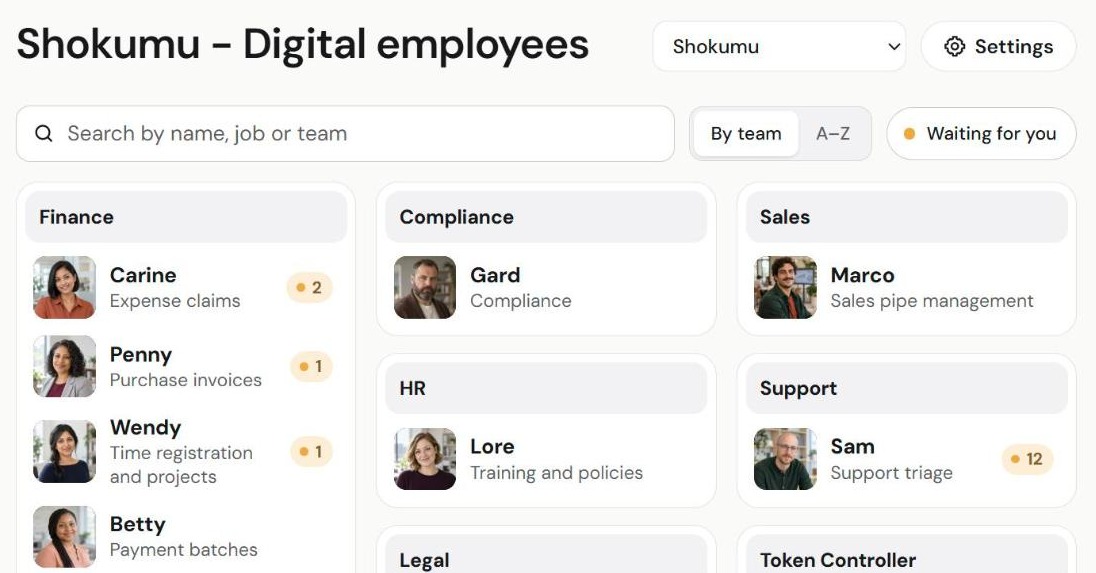
With AI, building is fast. A digital employee is built in a couple of weeks. That is good news, and it moves the critical path: from building the technology to embedding it.
The pitfall is to project the speed of building onto the speed at which an organisation adopts. Software can be changed overnight. A team cannot be reorganised overnight, and it should not be.
So can we embed faster than before? Yes. A digital employee has a much smaller scope than a large transformation. It takes over part of one job, in one team, so the change for the organisation is smaller too, and embedding goes faster.
Attention is needed when several digital employees are implemented on a short timeline in the same part of the organisation. Then their sum starts to look like a large transformation again, with the same need for change management. That is where careful roadmapping makes the difference.
What embedding really takes
The roadmap to the business case deserves the same care as the build. It can still be fast, but it has to be in control. Three things need attention.
The role of the team changes.
When part of a team's job moves to a digital employee, the job of the team changes too. What remains is different work: the exceptions, the contact with customers and suppliers, the decisions. That role needs to be reshaped on purpose, not left to happen.
Managing a digital employee is a skill.
Being a good human manager of a digital employee does not come automatically. Many people have never delegated work before. Reviewing, correcting and deciding what may run on its own takes some training, and time in the agenda.
A smaller team needs a plan.
When the business case means the team becomes smaller, that needs good planning: timing, new roles, natural departures. Done carelessly, it costs the trust you need for the next step.
How we help
Mikael and I have run large transformation programmes, with thorough change management, for most of our careers. That experience is at hand in every project we do.
We do not treat embedding as a separate track you buy on top. We consider it and monitor it in every digital employee implementation, and we bring it to the table when we sense it is needed.
We also have a simple reason to care. We stay responsible for our digital employees for as long as they work for you, and we love it when they have long careers. It is in our interest to do things nice and easy, not quick and dirty.
Fast, yes. Furious, no. See how we look at the business case for a digital employee.